

RD Calculator
Find the maturity amount of a recurring deposit with monthly instalments.
Bank • Post Office • SavingsEstimate using quarterly compounding, the method most Indian banks use. TDS and the bank’s exact day count are not included.
A recurring deposit (RD) lets you save a fixed amount every month and earn fixed-deposit-like interest. This free RD calculator estimates the maturity amount, your total deposit and the interest you will earn.
How to use the RD calculator
- Enter the amount you will deposit every month.
- Enter the interest rate offered by your bank or post office.
- Enter the period in months (for example 12, 24 or 60).
- Press Calculate RD.
How RD interest is calculated
Most banks compound RD interest every quarter. Each monthly instalment earns interest only for the months it stays in the account, so the first instalment earns the most and the last one the least. The calculator adds up every instalment: maturity = Σ P × (1 + r ÷ 400)(months left ÷ 3).
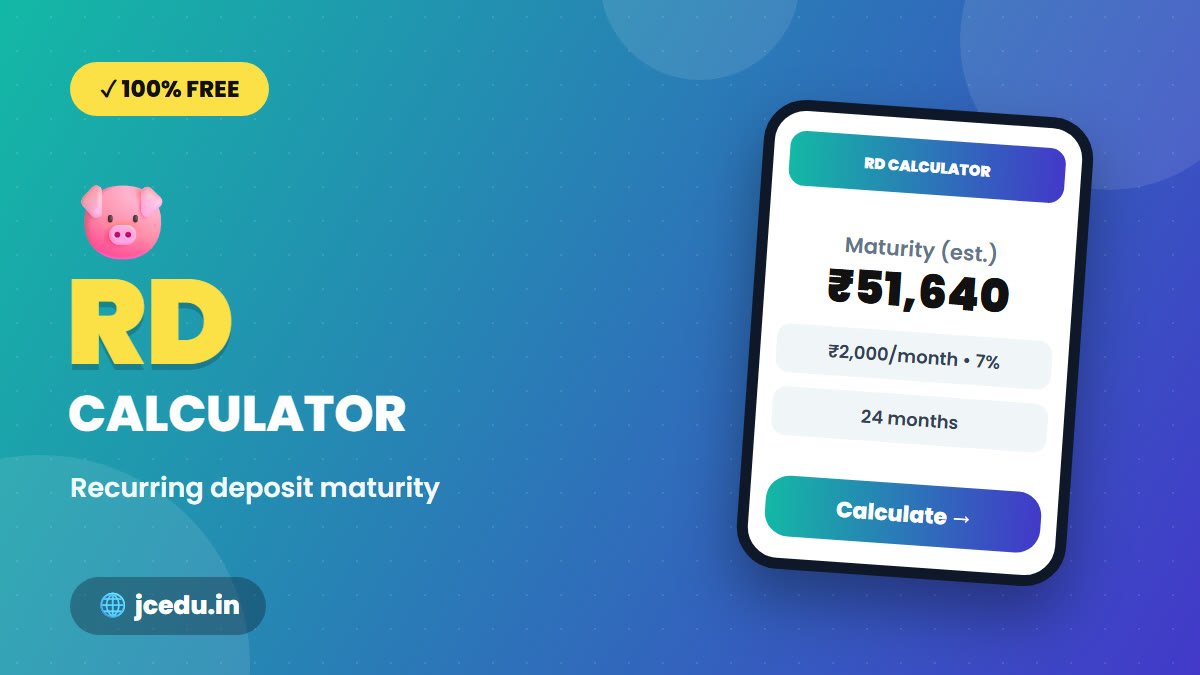
Example: ₹2,000 per month at 7% for 24 months means a total deposit of ₹48,000. With quarterly compounding the maturity is about ₹51,600, so the interest is around ₹3,600.
RD vs FD vs SIP
- RD: fixed monthly savings, fixed rate, low risk. Good for short goals like fees or a phone.
- FD: one lump sum, fixed rate. Try the FD Calculator.
- SIP: monthly investment in mutual funds, returns are not fixed. Try the SIP Calculator.
Frequently asked questions
Is RD interest taxable?
Yes. RD interest is added to your income and taxed as per your slab. Banks may deduct TDS if interest crosses the limit.
What happens if I miss an RD instalment?
Most banks charge a small penalty for a late instalment, and many close the account after several missed months. Check your bank's rules.
Why is my bank's maturity amount slightly different?
Banks use their exact day count and rounding rules. This calculator uses the standard quarterly method, so small differences are normal.
What is the best period for an RD?
Choose the period that matches your goal. Rates usually vary by period, so compare your bank's rate chart.